Two kinds of place keep turning up when you go looking for real seclusion. The private island, where the shoreline belongs to a handful of guests. And the remote lodge, where the wilderness does the work of keeping the world away. They can look alike in a brochure. They are very different to live in for a week.
The short answer
Choose a private island if your ideal day is unscheduled: a lagoon, a book, a long lunch, nothing asked of you. Choose a remote lodge if you want the place to give you something to look at, follow or climb, whether that is desert elephants, granite peaks or icebergs.
If you can’t decide, ask yourself one question: do you want to arrive and stop, or arrive and explore?
What a private island gives you
A private island is privacy by design. Tetiaroa, in French Polynesia, is a private atoll about 30 miles northeast of Tahiti, reached by private plane, with its villas set on the beach. Mnemba, off Zanzibar’s northeast coast, is a small island about three kilometres offshore, reached by a short boat ride from the mainland. There is no jetty, so you wade ashore.
The upside is obvious: few other people, a shoreline that feels like yours, and a rhythm set by tide and light rather than a timetable. The trade-offs are quieter, but they are real:
- The setting is the activity. Beyond water, reef and beach, there is less to “do”. That is a feature for some people and a limitation for others.
- Weather runs the schedule. Boat and small-plane transfers depend on conditions. Mnemba’s crossings are made in daylight only, and rough weather can shift them.
- You are on the island. It is a lovely place to be, but leaving for a day trip is a bigger undertaking.
What a remote lodge gives you
A remote lodge borrows its seclusion from its surroundings. Hoanib Skeleton Coast Camp in Namibia sits where a dry riverbed meets the edge of the Skeleton Coast National Park, and it is reached only by light aircraft. Torres del Paine, in Chilean Patagonia, is reached by flying to Punta Arenas or Puerto Natales and continuing by road, with lodges in and around the park.
Here the landscape is the main event. You head out in the morning, come back to a comfortable room, and the place looks different from one day to the next. The trade-offs:
- Days are more active. Early starts, drives, walks and sometimes flights are part of the rhythm.
- Conditions matter. Wind in Patagonia, heat in a desert, fog on an island: you plan around them rather than escape them.
- Fewer fixed comforts. Some lodges are small and remote enough that services are limited by design.
There is also a third kind that sits between the two. Fogo Island Inn, off Newfoundland, is on an inhabited island reached by ferry, with a real community around it. It has the isolation of an island and the character of a working place, which makes it neither a private island nor a wilderness lodge.
A quick comparison
| Private island | Remote lodge | |
|---|---|---|
| Privacy | Very high; few guests share the island | High; the surroundings provide it |
| What you do | Water, reef, beach, rest | Wildlife, hiking, drives, landscape |
| Getting there | Often a private flight or boat | Often a light aircraft, ferry or long road transfer |
| Weather sensitivity | Sea and flight conditions | Climate, wind, season |
| Pace | Slow and self-directed | Structured days with downtime |
| Best for | Rest, celebrations, doing nothing well | Curiosity, nature, a sense of place |
Questions to ask before you book
- What exactly is the final transfer, and what happens if the weather delays it?
- What is included in the stay, and what costs extra?
- Are there daylight or weather limits on the boats or aircraft?
- How far is the nearest medical help, and what is the evacuation plan?
- How many guests will be there at the same time?
- Are there baggage limits on the final flight or boat?
Frequently asked questions
Is a private island more exclusive than a remote lodge?
Not necessarily. A private island offers exclusivity of space, while a remote lodge offers exclusivity of access. Some of the hardest places to reach are lodges that can only be flown into.
Which is better for a first remote trip?
If you want the simplest rhythm, a private island with a clear transfer is often the easier introduction. If you are curious about wildlife or landscape, a lodge with a well-organised itinerary can be just as easy, and more varied.
Which suits a longer stay?
A lodge with varied activities tends to hold up well over a week or more. A private island is wonderful for a few days to a week, and some guests find the sameness settles in after that.
For specific places and the exact routes to reach them, see our guide to the world’s most secluded luxury escapes. Details such as transfer times and seasonal opening dates change, so confirm them with each property before you book.
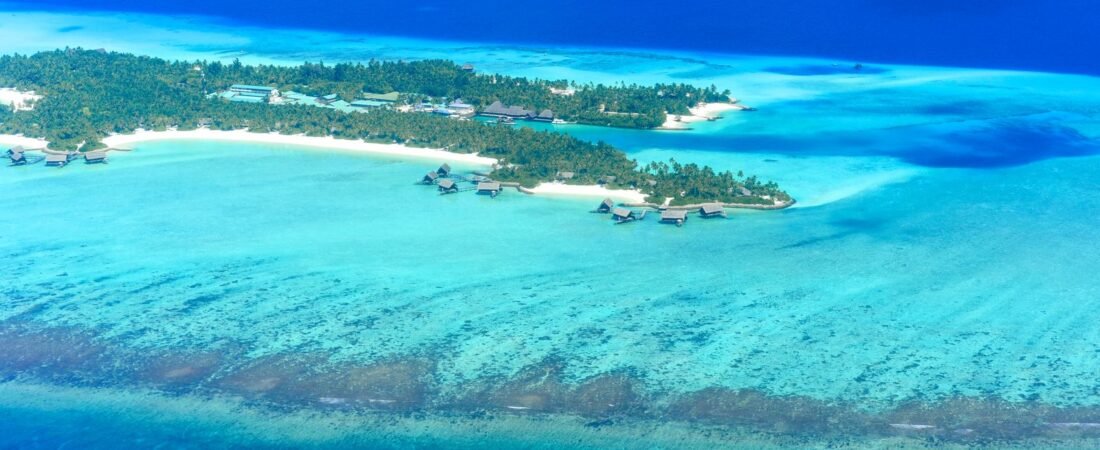
Featured photo: aerial view of a tropical island in the Maldives by asadphoto, via Pexels.